
Structural Steel Experts in Indiana
Structural steel refers to steel fabricated into load-bearing shapes such as I-beams, H-beams, channels, and hollow structural sections that support the integrity and durability of buildings, steel buildings, and infrastructure in building construction. Building and structural projects have a lot of moving parts that each require a great deal of attention, and with so much to consider- from site conditions and materials selection to schedule, standards, and cost – you need a partner that can support the construction industry and the different industries served by structural steel work. For over 135 years, Indiana Bridge has provided that service to project managers, builders, engineers, and clients across Indiana. No matter what stage you’re at in your project, we can help.
Our team has the knowledge and expertise to offer customized, cost-effective solutions using a range of structural materials to meet your project’s structural needs. We can even provide the high-quality fabricated structural steel products you need for buildings, steel buildings, and custom applications in industrial manufacturing and other industries. Whether you need structural steel fabrication, design-build delivery, surface preparation for coating, rack solutions, project management, custom steel solutions, guidance on member types, corrosion protection, or answers to common structural steel questions, we help you make informed decisions that keep projects on time, on budget, and aligned with defined industry requirements. To learn more about our structural services, contact us to request an initial consultation with a member of our experienced team.

Other Services We Offer
Learn More About Our Structural Services
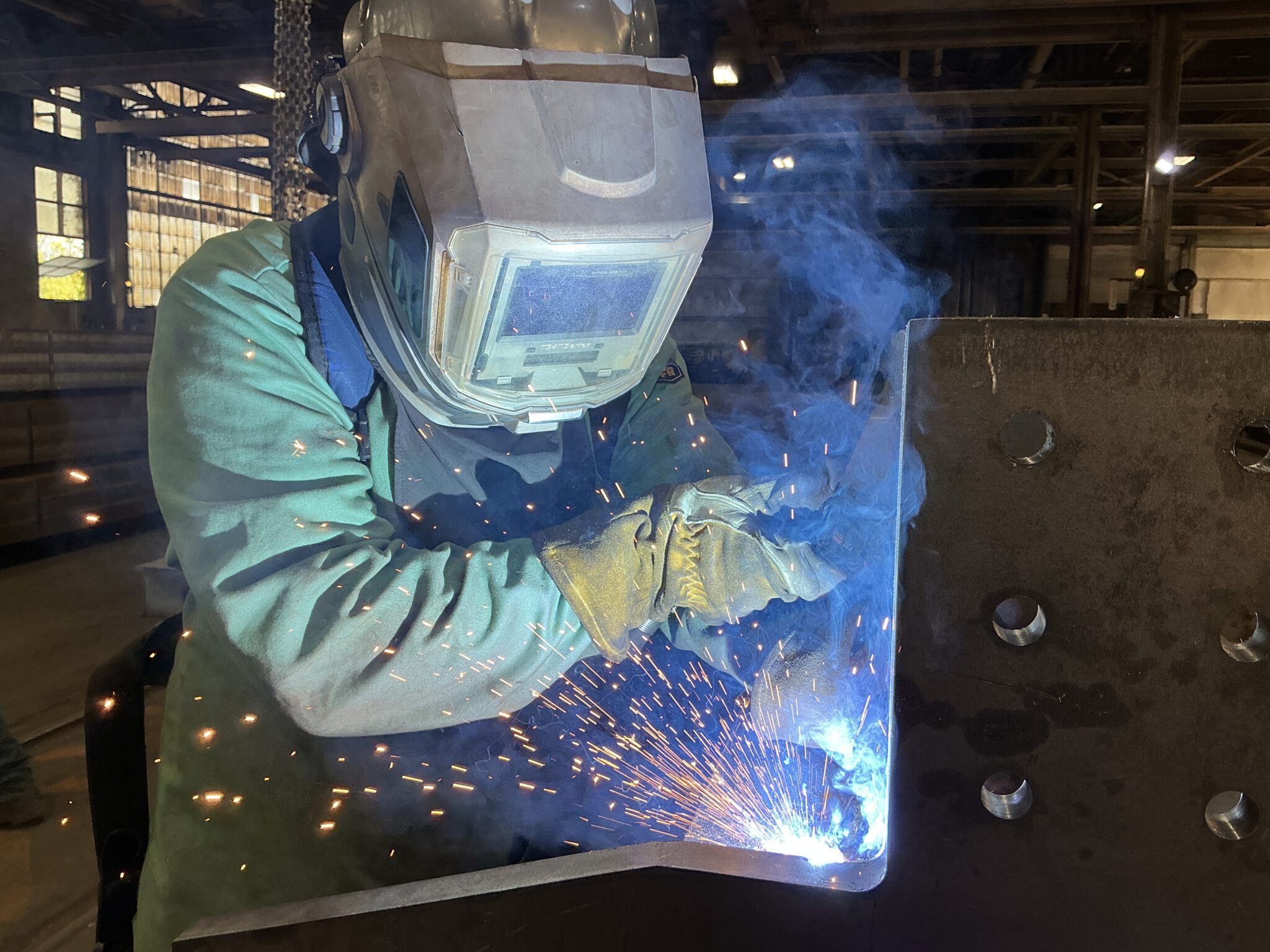
At Indiana Bridge, our clients’ needs are our top priority. We specialize in creating custom steel solutions for commercial, industrial, and building construction projects across industries that rely on structural steel for strength and support. To provide the best service, we give an all-hands-on-deck approach to every task we undertake.
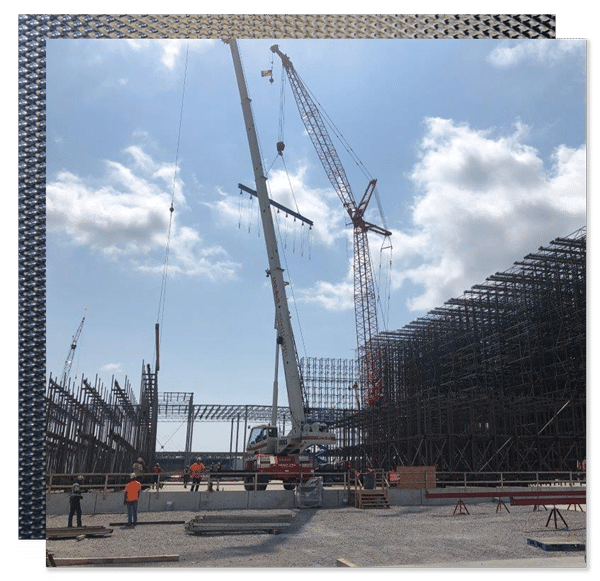
Our engineers will work with you from the ground up to design a steel structure that fits your needs. Structural steel is the most popular framing material in the U.S. and is used in everything from low-rise to high-rise buildings. Over half of non-residential buildings in the US use structural steel, and steel framing with components like wide flange beams enables wide spans and large column-free interior spaces. Then, our fabricators, builders, and installers will make sure your project is completed efficiently. This service is what makes us Indiana’s one-stop shop for structural services.
To learn more about our structural services or share your ideas with our team, contact us to request an estimate. A member of our team will get back to you to discuss your needs and how we can best meet them. We look forward to partnering with you on your next structural project.
Structural Services FAQs
Structural steel members are available in various shapes, including I-beams, H-beams, channels, angles, tees, plates, and hollow structural sections. I-beams and H-beams are designed to handle heavy loads and bending along the major axis, making steel a common material for beams that support roofs in place. Each shape is designed for specific structural applications based on its load-bearing, connection, and force requirements, with angles featuring a 90-degree angle and equal or unequal legs as L-shaped members useful for small structural connections and bracing. Channel steel has a C cross-section with a web and two flanges, and channels are often more useful as secondary members than primary beams. Tee sections resemble a T profile and can be rolled, formed by splitting an I-beam, or fabricated for specialized uses.
Hollow Structural Sections, or HSS, are commonly used where resistance to compression and torsion is important. They are available in square, rectangular, and circular cross-sections and can be used in columns, frames, and other structural applications.
Structural steel can be protected from corrosion through methods such as protective coatings, galvanizing, proper detailing, and weathering steel. The appropriate protection method depends on the environment and the intended service conditions.
Steel grade describes the material’s mechanical properties and chemical composition, including iron and carbon content, while steel shape refers to the physical cross-sectional form of the member. For example, A992 is a common steel grade, while an I-beam, channel, or angle describes a structural shape. In structural applications, grades are defined this way, and structural steel can contain up to 2.1% carbon overall. Low-carbon steel typically contains 0.04% to 0.3% carbon, and carbon steels in the mid- to high-carbon range run from 0.31% to 1.5% carbon and are also used in mechanical engineering. Some high-strength low-alloy options also deliver higher yield and tensile strength per unit weight.
Weathering steel is a type of structural steel containing alloying elements such as copper, chromium, and nickel. When exposed to suitable environmental conditions, it develops a protective rust-like surface layer that helps reduce further corrosion.
Structural steel construction is governed by various standards depending on the location and application. Common standards and specifications include AISC and CSA requirements, ASTM A6 for hot-rolled structural steel shapes, and EN 1090-1 for structural steel fabrication and CE marking in applicable European markets, where CE Marking became mandatory in 2014. In practice, each structural steel system should be designed, fabricated, and erected in accordance with the applicable standards.