Surface Prep for Steel Coating in Indiana
The importance of surface preparation cannot be overstated in steel construction. A dirty, oily, flaking, or otherwise compromised surface often contains surface contaminants that prevent a clean surface and can significantly reduce the effectiveness of a new coating and cause adhesion failure. Surface preparation prepares the material to receive protective coatings, follows a recognized surface preparation standard framework for proper adhesion, and supports coating-industry requirements shaped by standards AMPP maintains.
Indiana Bridge offers steel surface preparation services so your material is ready to receive its coating. Our team will assess your steel’s needs and perform the most appropriate cleaning method, whether that involves solvent cleaning, abrasive blasting, or chemical cleaning before coating application, to remove contaminants before applying a corrosion-resistant coating. Contact us to learn more about our surface preparation.
Surface Preparation for Steel
We use state-of-the-art equipment to provide the best service possible while meeting industry standards on time and within budget. Our technicians are ready to help you with any surface preparation job, whether industrial or commercial.
To learn more about Indiana Bridge and why we should be your first choice for all your surface preparation needs, please contact us today!
Other Services We Offer
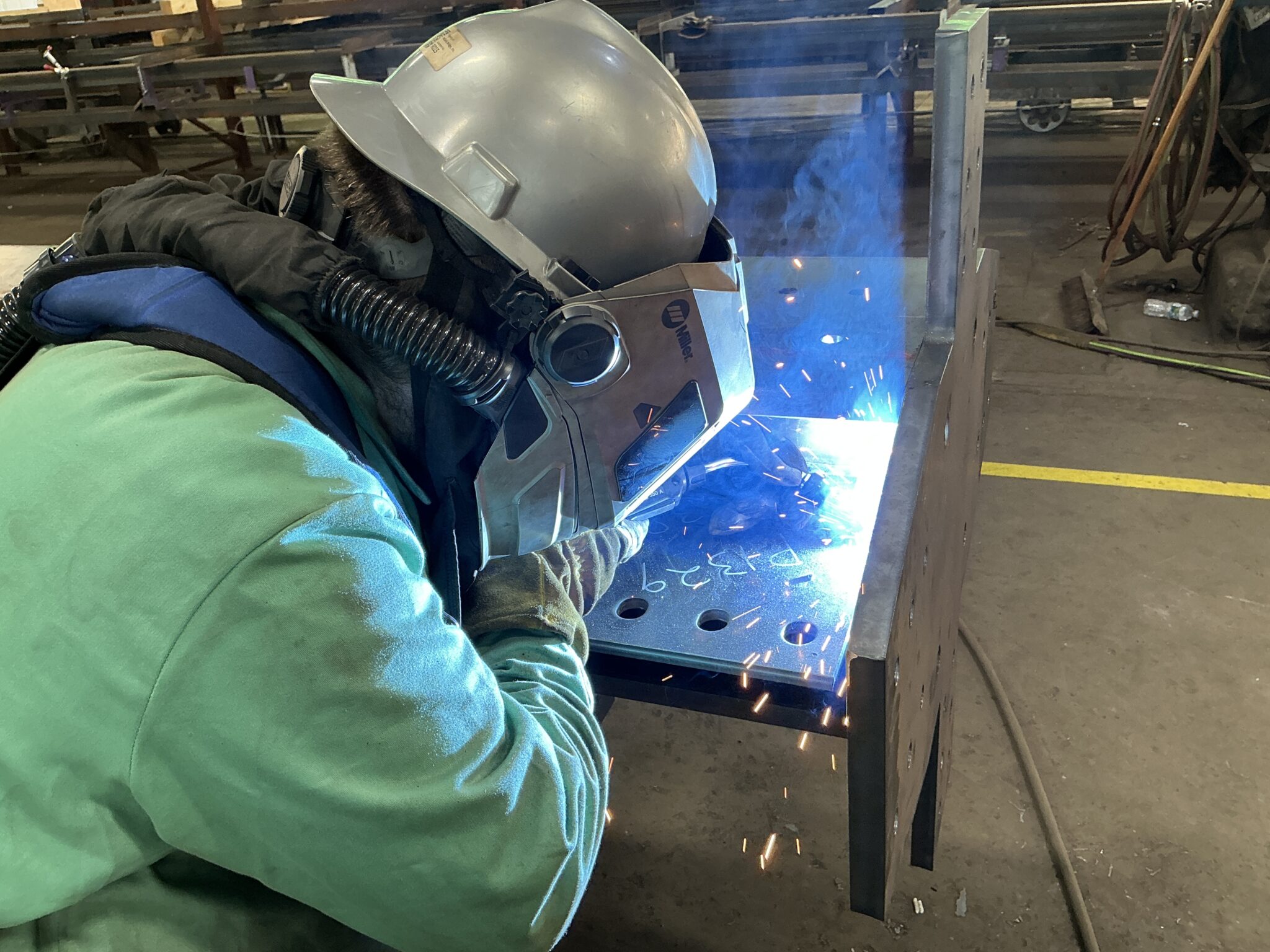
Indiana Bridge’s surface preparation is just one service we offer as part of a full line of solutions we offer. Along with preparing steel materials for coating, we can fabricate these products to meet the needs of any application. Contact us today to learn how.
Steel Fabrication
We have the equipment, resources, and expertise necessary to fabricate high-quality steel products on time and within budget.
Structural Steel
Our skilled machinists and erectors can take on projects with varying levels of complexity and deliver the most precise structural steel products available.
Design-Build Project Delivery
With Indiana Bridge on your side, finding suitable materials and equipment for your steel project has never been easier.
Indiana Bridge’s Surface Preparation FAQs
When searching for the right surface preparation for your materials, you’re bound to have questions. That’s where the Indiana Bridge team steps in. We’ve compiled common questions we hear about our surface preparation methods from our clients across Indiana.
At Indiana Bridge, our surface preparation occurs in several steps, including:
- A thorough surface condition assessment
- Removing existing coatings from the surface
- Solvent cleaning to remove visible oil, grease, soil, cutting compounds, soluble contaminants, and other soluble contaminants by wiping, spraying, or immersion
- Hand tool cleaning or power tool cleaning to remove loose rust, loose mill scale, loose paint, and foreign matter when needed, using hand tools or power tools
- Drying the surface, remove dust and loose particles from the prepared surface, and prepare for coating application
These tool cleaning steps align with SSPC-SP 2/SP 3 and are used when manual methods alone are not enough.
A rust-inhibitive primer should be applied promptly after cleaning to help prevent flash rust on carbon steel.
To learn more about our surface preparation process, contact us.
Surface preparation, especially for steel, has a variety of benefits, including:
- Improved adhesion of a paint coating through the right surface roughness, which helps create a mechanical key for high-build finishes and thermally sprayed metal coatings
- Extends the lifespan of the steel
- Corrosion and damage prevention
- Removes corrosion products, mill scale rust, and other debris
Proper surface prep also supports long-term coating system performance, especially for protective coatings on steel structures.
Proper surface preparation removes contaminants such as oil, grease, rust, mill scale, and corrosion that can weaken weld integrity and reduce coating adhesion. Clean and properly profiled steel surfaces help ensure stronger welds, longer-lasting coatings, and reduced risk of defects or premature failure.
SSPC-SP5 White Metal Blast Cleaning requires the complete removal of all visible contaminants, coatings, rust, mill scale, oxides, corrosion products, and other foreign matter down to bare metal, with dry abrasive blast cleaning as the preferred method. SSPC-SP10 Near-White Metal Blast Cleaning, as defined by the Steel Structures Painting Council, requires the surface to be free of visible oil, grease, dust, dirt, rust, coating, and other foreign matter, with random staining limited to five percent of each unit area. Compared with commercial blast cleaning, SP10 is more stringent, though near-white surfaces may still show light shadows, slight streaks, tightly adherent mill scale, or minor discolorations caused by staining, while white metal does not.
V-Groove and J-Groove bevel designs are commonly used on thicker steel materials because beveling cuts the edges of steel plates at a precise angle to create a groove for the filler metal. As part of the broader surface preparation steps before welding, plasma or oxy-fuel cutting is commonly used to produce these bevels and bring steel sections to exact dimensions. Proper fit-up then keeps the parts flush and maintains a strict root gap to reduce distortion and ensure consistent joint strength.
Abrasive blast cleaning propels abrasive media at high velocity, often with compressed air, to remove rust and mill scale and create the needed surface profile. This method is commonly used to remove mill scale, prepare steel for a coating system, and deliver thorough mechanical cleaning on mill-scaled and rusted surfaces through the continuous impact of abrasive particles on the steel surface. The roughened surface allows coatings and primers to mechanically bond more effectively, increasing durability, corrosion resistance, and overall coating lifespan. In some cases, other methods such as vacuum cleaning may be used afterward to remove residual dust from the surface.
How often a steel coating needs to be replaced depends on the type of coating and the environment it’s exposed to. Typically, most types of coatings last around 20 years. Regardless of how long the original coating has been on the piece, we recommend that you treat old coatings using the appropriate surface preparation methods. Complete removal is not always required if the remaining coating is sound, but any loose coating must be removed to ensure proper adhesion. Indiana Bridge can help you do that. To learn more about our surface preparation methods, contact us today.
Other Services

Explore Your Surface Prep Options
Surface preparation is essential to any coating process, and Indiana Bridge will ensure it is done right. We understand that the quality of your surface preparation will significantly impact the life of your steel’s finish. Explore our surface prep options by calling us at (765) 288-1985.
Our Surface Preparation Projects
We offer surface preparation for all structural steel products used in various building and construction applications. Visit our project gallery to see samples of our work.